20040214

Legislative Proposal: Civil Immunity for Hosts of Armed Citizens Act of 2004

Colorado law provides for businesses, churches, and other such entities to exclude concealed-carry from their premises. We are ambivalent about the law granting such rights very broadly, in spite of the private-property aspect that these rights imply.

Businesses in Colorado are posting, or considering posting against CCW, more so now that the CCW law has been changed to shall-issue. They aren’t all doing so because they have any particular animus towards armed citizens (surely some do but all do not); they’re doing it because of the threat of liability. They are worried, reasonably, that they will be sued if a lawfully-carrying citizen has to draw and fire on their premises. Given the urban legends of frivolous lawsuits, we can understand but we cannot sympathize with businesses who are posting to protect themselves from such liability. We gun owners are responsible people and we insist that responsibility be not laid at innocent feet.

In that spirit, we propose the following Colorado law:

No enterprise engaged in lawful commerce or other entity hosting a peaceable assembly on premises located in the State of Colorado shall be found liable, jointly or severally, in civil proceedings for pain, suffering, injury, or death inflicted upon any person on, entering, or leaving said premises by a person armed in accordance with the laws of the State of Colorado.


We are not lawyers so we may have missed some term of art or exactitude. We will not accept any hits for run-on sentences. Note that we don't want to rule out Vermont-style carry should that ever be attempted again (ohhhh, it will).

20040210

The projectile is the weapon

so we start our description of Fûz's Thumper with caliber and cartridge.

Jeff Cooper originally recommended .44 Auto Mag, made by cutting down, blowing out straight and reaming a 7.62mm (.308 Winch) cartridge case to acccept a .429" bullet. This was back in the day when AutoMags were big, all-stainless, custom rotating-bolt pistols of a unique design. Clint Eastwood's Dirty Harry had an AutoMag as a SHTF gun in Sudden Impact. We can recall no other movies featuring this rare pistol.

You can form your own cases and load your own ammo---in fact you have to. Reportedly the guns themselves were finicky and would feed reliably with only a few loadings. A 180-grain bullet at almost 1800 fps from the muzzle would be devastating.

The AutoMag is now a collector's item, but the .45 Winchester Magnum seems to be around to stay. A firm briefly offered an M1 Carbine rebarreled and otherwise modified to fire this cartridge, but we don't hear from them anymore.

That cartridge would suffice, we suppose, but we add some criteria:
  • we'd rather have a shoulder to headspace against
  • we want a hard crimp to make the chamber pressure more consistent from round to round, and make the ammunition more tolerant of the recoil banging it around as it climbs the magazine towards the chamber.

We want a case with a shoulder. It doesn't have to be much. We'll give a little on bullet diameter to get one.

So we propose a case of 33mm length, just like the .44 AutoMag, with a tiny shoulder and outside neck turned if needed so it takes the .410" bullet. Load the same weight to the same velocity, with a jacketed truncated cone bullet. This is no new invention, it's the .41 Jurras Magnum Pistol cartridge, for which we can find no URLable load data.

This cartridge, if OAL is managed, will fit in the M1 Carbine's magazines.

Not enough, you say? Put the same treatment to the .45 Win Mag case instead. Then you have the .41 Avenger. It will have greater propellant capacity, and tolerate higher chamber pressures, but it will be more expensive to manufacture and supply because it relies on a less-commonly available component. Fûz's Thumper will not require special feeding if we can avoid it.

20040209

RMBR

Another Rocky Mountain Blog Roundup, this time at Matthew Edgar's place. Please go read what the Rockies have to offer.

We were sniffed today, and about damned time

As we pointed our urban assault vehicle on to the I-25 today, a big van was parked on the shoulder with traffic cones around it. The driver was dismounted, fiddling with a tripod upon which a little aluminum box was mounted, pointed at tailgate level of the cars descending the ramp. Right where cars would naturally be stepping on it to merge with three lanes of traffic climbing a hill with a legal limit of 75 mph.

The van's markings identified it as an automotive emissions remote testing system. About damned time.

Your humble blogger published the following lettitor in the Centre Daily Times in September of 1994:
Imagine a device about the size of a piece of luggage. It can sense pollution in automobile exhaust by the way light passes through it. The device can be placed along a busy roadway, and will flag the one car out of one hundred that pollutes too much. The device senses real exhaust in the real world, in any weather, in real driving conditions, maybe even at night.

The other 99 cars, and their drivers, pass by without inconvenience; their engines are in tune and their drivers keep them that way. Drivers from other parts pass through, and if they pollute, the device catches them. If they don’t, they go about their business.

Imagine that this device costs about as much as a car. Almost every county in Pennsylvania could afford one.

Now for the hard part: this device exists. It was field tested in California (notorious for clean air standards) two years ago. It could be a regular production item this year if enough states ordered them.

Unfortunately, the Commonwealth of Pennsylvania is committed to a system of centralized, stationary auto emissions testing centers. Blair and Centre county cars must be tested. Cars from neighboring counties, where emissions aren’t tested, may pollute here. Our cars may not.

Regardless of how well you maintain your car, the emissions testing center requires you to make an appointment, maybe even take off work, to submit your car to testing. You pay for the test.

The testing center also tries very hard to simulate real-world driving conditions, and doesn’t quite cut it. All that simulation isn’t cheap either. This emissions testing center costs a lot more than a car; it costs more like what a small bridge costs. Something’s wrong with this system.

Ask yourself which you’d rather have. Then call our Governor and ask him: why not "passive remote" auto emissions testing?

It shouldn't have taken them ten years to prove me right. I'm beginning to suspect that they don't want to.

20040208

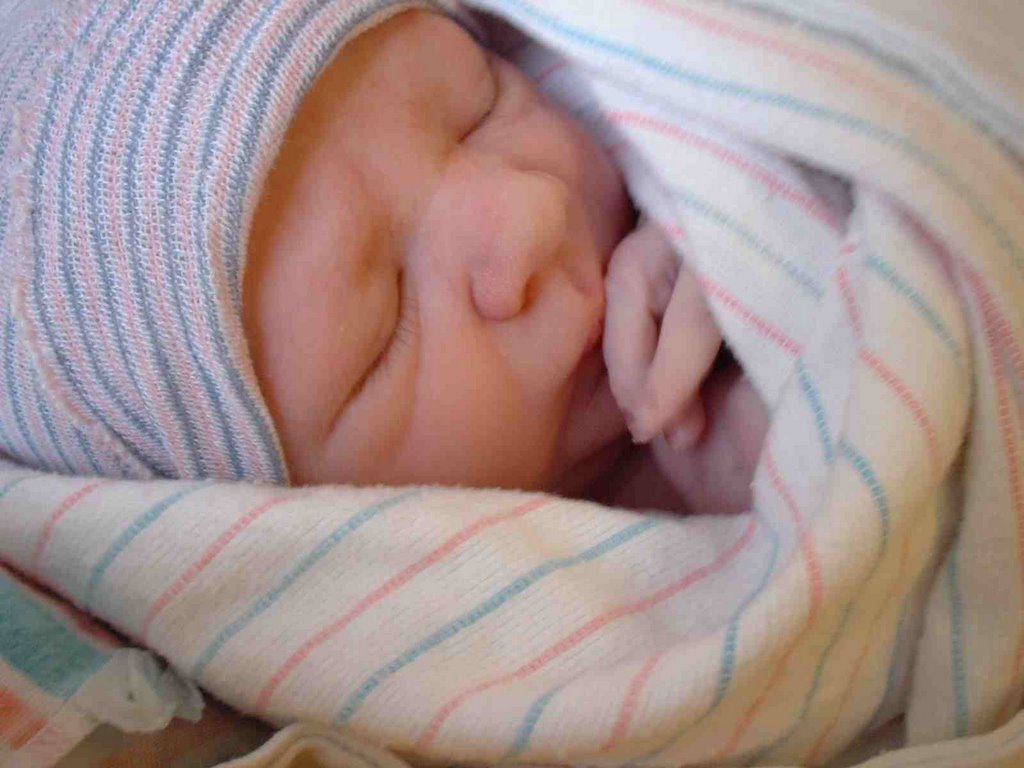
Gratuitous baby pic


Toad at 4 days, belly full, taking it all in.

20040206

He had me until I read this line (some edits)

If one party collapses altogether, as is possible for the Democrats, will the other fission into two in order to fit our two-party paradigm?

Emphasis mine. Frederick Turner's Tech Central Station column neatly summarizes the intersections of several axes of political thought but this line, the next to last sentence, does not ring true to the editorial star chamber at WUTT!

Pardon us, especially you happy few conservative readers of this here blog, but the Democrat party is in very little risk of collapse.

The kind of people who hold power in the Democrat party (not necessarily the rank-and-file, mind you) have learned one lesson very well in the last few decades: they can get what they want, or what their narrowly-defined constituencies demand, if they remain loyal to each other. Their party has no unifying principles, only people dedicated to reelecting themselves and each other while offering lip-service to the Hard-Working Middle-Class American TaxpayerTM (and increasingly, Our Brave Men And Women In UniformTM).

A political party with at first nine people seeking its nomination for the Presidency does not appear to be a party in decline. The qualities and origins of those people is another matter. They will openly bicker, but about the details of what it will cost in political capital for one candidate to drop out and lend his support to another. Like the aphorism about the propositioned woman who recoils in disgust, "not for a million dollars!" the propositioner is encouraged because now it is just a matter of negotiating a price. (Re)electable Democrats accept that everyone has his price, the difficulty is finding it without embarrassment and being able to pay the quid to get the quo.

The GOP, on the other hand, is in serious risk of splintering, on the matter of principle, rather, President Bush's apparent lack of loyalty to GOP principles. For example, some Republicans are choosing to support Kerry, motivated by anger at the guest-worker proposal, hoping that a Democrat President will gridlock against a GOP Congress and no serious public policy damage would result. He lost some faithful with the steel tariff, some because of his support for renewing the assault weapon ban, a lot to the Medicare prescription drug expasion.

"Principled" conservatives, as Turner observes, will put public policy issues above price, or as he put it, "separate and insulate higher values from the marketplace." Instead of replying "not for a million dollars," they'd say "never," and mean it.

George W Bush, the natural delegator, is clearly less loyal to principles, and more loyal to people---the people he installed on his Cabinet, the dream team probably handpicked for him. For delegation to work, he has to be loyal to them, and demand the same loyalty from them, regardless of whether they adhere to traditional GOP positions.

In case you haven't noticed in other endeavors, a team assembled from "best-of-breed" members who otherwise have little to do with each other, doesn't work together very well or for very long.

Holding such teams together requires extra effort in the loyalty-to-people department, with heavy helpings of PR, market research, running interference, talking points, ass-chewings and -coverings, and at worst "choosing to spend more time with his family." Among the GOP, maintaining a cohesive team in a real breathing government looks like managing a team of high-performance salesmen---competitive, self-made, ambitious, internally disciplined, externally polished, publicly cordial to each other and happy to golf together, but each one barely concealing a weird streak, and bound to privately get on at least two other salesmen's nerves.

In contrast, the Democrats' bickering is out in the open, blatant, pandering, counting feathers and coups. The behavior on display in the primaries is not enough to disgust and alienate their base, because that base is deeply in hock to the Democrat party for their livelihoods. They'll find a way to prevaricate, circumlocute, metadiscuss, change the subject, and so on because they are, well, loyal to their next meal.

The GOP leans on a pretense of holding together by common principles. Those principles are not internally consistent enough, and the rift is growing, as Virginia Postrel observes and Frederick Turner agrees. Without this hobgoblin of little minds, the GOP instead relies on personal loyalty just to keep itself together and retain power. Absent Lee Atwater's Big Tent, valuing loyalty over principle does not work for the GOP except in tight circles formed in:
  • industry (outsiders hold these with suspicion---Cheney blah blah blah Halliburton!),
  • a prior administration,
  • professional or academic associations, either innocuous or underground (Kurt Vonnegut was a Rotarian!) or
  • multiple terms of horsetrading in Congress (conditions not favorable for developing or selecting men of principle).

The only other substitute for well-policed common principles is patience---take half a loaf now, let the other half rise while the ideological direction of the Supreme Court is altered by a few key appointments, for example, and tolerate some of the morally objectionable consequences of the last few decades until public opinion comes around (note Turner's observation of libertarianism, "in the end fairness will emerge"). Moralists, versus pragmatists (another libertarian writer uses the term "consequentialists"), are not, in our experience, patient.

The Libertarian Party suffers more from an overrepresentation of moralists, and a resulting internal lack of patience, than from a lack of adherence to principle among its members. They insist perhaps too much on principle to succeed at electing anyone, indeed they can be each others' worst enemies (who was it that warned, "Libertarians: do not drink Libertarian blood!"?). Some loyalty to people would benefit them, which is not natural for the G-d-damned independent types whom the LP normally attracts.

Despite President Bush's very good performance in the armed conflict, the GOP will collapse first. Sorry. That doesn't mean that John F-ing Kerry will be the next President, rather, Bush's party will be bruised and shaken in reelecting him, and have a difficult time choosing his successor and electing him or her. The Democrat party is much better at absorbing the shock of such internal struggles, in fact they endure it every four years. Nader was chump change as a spoiler for the left, compared to Perot and Buchanan on the right.

20040204

Tadpole becomes Toad

At 10:27hrs Mountain today, Tadpole drew his first breath and became Toad. Three dot two kilos. Say hello.


Barbaloot spent about twelve hours with unproductive contractions, and as they became painful, she opted for the epidural. Toad squeezed out shortly thereafter.

20040202

Coming soon

Fûz's proposal for a Thumper.

Design goals, over and beyond the Thumper specification:


When we were writing tech manuals for a living, we learned that smart firms (not my own, of course) wrote the manual first, as a vehicle to define the product before serious pen-to-paper design ("pen"? "paper"? yes, a long time ago) could begin. In that spirit, the operator manual is about half-way done and will be published first right here.

Countdown begins

We check into the hospital tomorrow evening to induce Tadpole into becoming Toad.

It. must. breathe. Air.

Quote of the day

The API list keeps offering up gems, and we can only find time to post them here as we find them, rather than compose our own thoughts. In this case Raven Charles Riggs, with his permission, regarding the confusion of pacifism with cowardice among the faithful:
Churches must confront the reality of evil in the world, not be governed by the hope that they won't encounter it in their lives. And they must believe that they're teaching their members how to deal with evil when they encounter it, in whatever form and in whatever place.


How many times does the word sword appear in the Bible?

20040130

Quote for Today

comes from Raven Steve Cooper, who contributed this to the API list, in a discussion about many frontier lawmen who happened to come from the wrong side of the law, and their victims:
I bet there's many a nameless cowboy buried as a bad guy who was really just fighting for his rights.

With permission.

It's "Feeeooooooz" dammit

James Lileks guest-hosted Hugh Hewitt's radio program last night, and was riffing on the topic of what TRB stands for, in the case of The New Republic's weblog.

I called in with Tap, Rack, Bang, a malfunction drill for a weapon that goes click instead of bang. The producer couldn't get his head around my pseudonym, and James pronounced it "Fuzz."

Some disappointment. And I didn't even get to plug WUTT! on the air.

But damn, Lileks has a voice for radio.

Quote from two years ago

Found on the API list, back in October of 2001:
"We need to make Americans out of American children, not multiculturalists who accept the fiction that all systems and all beliefs are equally good."


Cal Thomas

We are raising our own kids this way, and we're vigilant for any sign of indoctrination from the government-run schools that will run counter to it. That said, I oppose (mildly) Colorado's law that my children recite the Pledge of Allegiance at school. Rarely will anyone younger than 12 or so understand what he or she is pledging himself or herself to.

20040128

Where's the Any key?

Ex-president Bill Clinton writes in longhand rather than compose his thoughts in MSWürd. Senator Hillary had to learn how to use e-mail to communicate with their daughter in college.

Can I have my Universal Service charge back?

20040125

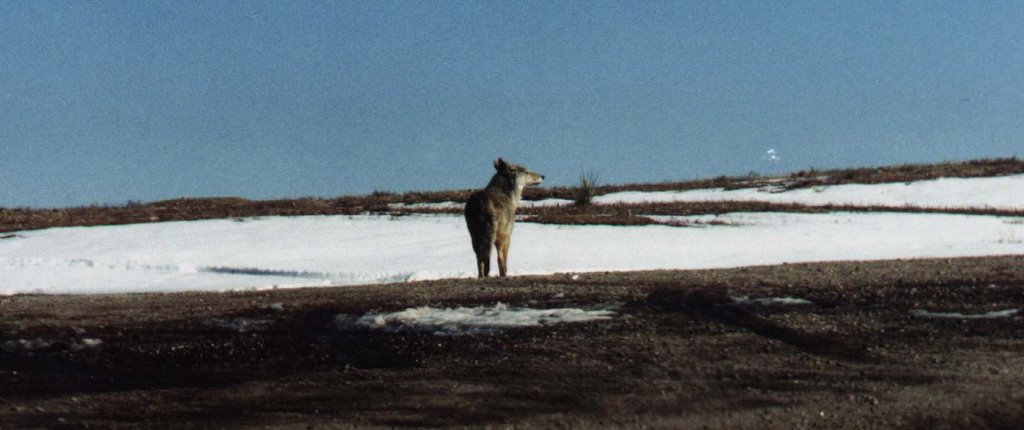
I've found my coyote, alright

Swen offers the Cherry Creek Country Club as a good opportunity to take a coyote. A heartfelt thanks!

However, I've got one practically out the front door where I work. Four times in the last thirty days I've spotted a strapping lad who works his way from the prairie of Buckley AFB, over to the flightline to thin down the rabbits and prairie dogs among Colorado ANG's F-16 sheds.

He usually shows up at dusk, when the only lawful dynamic human-wildlife interface in that area, Fuji ASA 400 in a Canon T50 with an f/3.8 150mm lens, will barely reach him. He also understands very well that photography is prohibited on the flightline, so I have to catch him in the open before he crosses into it.

I've got about 8 exposures of him so far, and if exercises and Distinguished Visitors weren't getting in the way, I might have resorted to camping out in the upstairs latrine at Building 909 with a tripod and the doubler on the lens.

Update: I heard a pack of them yipping after midnight chow last night. Reminded me of the song "Me just a Worthless Coyote" from the Hank the Cowdog children's books. And e-Claire has had her own encounter with 'yotes.
Update 2: The photos are in. The dusk photos were badly underexposed. However, I caught one as he appeared at high noon near where they were singing a few nights before.

20040122

Another class of migrant worker

We've been searching for an analogy to the Bush guest-worker proposal, the better to test the proposal and find where people's objections to it truly originate. So how about this?

Imagine that a class of foreigners seeks to enter the United States because they see opportunities for themselves that do not exist in their home countries. Brokerages arise to match the foreigners to such positions. The positions are plentiful but the cost of the transaction, increased artificially by US immigration controls and delays, makes recruitment unaffordable for most US firms who would otherwise offer these positions: pent-up demand.

Comparably-qualified native US citizens are not filling all of these positions because the compensation and perks are widely variable. The lowest compensated positions are going vacant and even many middle-level ones if the perks aren't quite right. They are satisfied with the tight immigration controls that keep foreign candidates out and artificially increase the aggregate price of the positions they do take.

Like it or not, this is an Econ 101 question graphing supply against demand.

Are we discussing peach pickers on the Western Slope? Framers and landscapers on the Front Range? Meatpackers in Fort Morgan? Pakistani software engineers on H1Bs?

No. Mail-order brides.

Bonus points if you can draw a parallel with the Bush proposals to "promote healthy marriages."

Discuss until I get back. Will be below radar until after some exercises and the birthing of one Tadpole; posting will remain light.

It's rather small, really

If my friend Joe convinces me to run for the US Senate, I'd rather be interviewed by Howard Stern than Connie Chung.

Found via Buzzmachine, via Instapundit.

20040119

"It's too scary"

Firstborn is now watching the DVD of Frodo and the Fellowship slogging through the mines of Moria. She has to turn away and cover her ears from time to time, such as when the Nazgul stabbed Frodo at the watchtower of Amon Sul.

We warned her.

We just finished reading The Hobbit to her and Middlechild so she had an inkling of what she'd be getting into.

What's amazing is what she already knows about the story, from her buds at school, who have already watched the DVDs or seen the movies in theater. In a way, this father feels a little jealous, that she's learning these things from her friends instead of from me.

What scares me, then, is that there are a few topics that we'll have to accelerate a bit so she definitely does learn them from us instead of her friends.

Political plug---Arapahoe County

Travis Nicks seeks to be elected to the office of Clerk and Recorder for Arapahoe County, Colorado. Please go read up.

20040116

It isn't the rifle, it's the cartridge

StrategyPage notes that Uncle Sugar is going to give the Heckler und Koch G36 a go (no permalink, look under 14 January 04), under the designation XM8.

Civilians in the less afflicted provinces can sample a functionally identical rifle in the XL8T.

It's all very interesting, Uncle, but the new platform sends the same booolet at the same velocity---or if even shorter barrels than that of the M4 carbine are considered, even less velocity.

Clearly the light and short weapon is needed, for mounted troops, rear-area troops who need to be armed but are not constantly engaged in fighting, and so forth. But there's no need to stay wedded to the weaker cartridge that comes along with today's carbines.

The proposed 6.8mm Remington SPC cartridge is headed in the right direction, using a case that is slightly larger in diameter than the 5.56mm, giving it slightly more propellant capacity, to push a .270" bullet.

This .270" bullet must be short and squat to fit the entire cartridge within the 5.56mm envelope around which modern carbines are built. This short, squat bullet has a poorer ballistic coefficient than it needs to have, so it will lose velocity faster and drop more as it travels.

So a counter-proposal: take the 5.45x39.5mm cartridge case of the AK-74. It has the same case head dimensions of the 7.62x39mm AK-47 round, in fact is is mostly the same case, but the Soviets "Ackleyed" it by forming the case walls straighter, eliminating the case's body taper to increase the propellant capacity.

Just don't neck it down to 5.45mm, stop at 6.5 or so.

The resulting cartridge case will be about 6mm shorter than the 5.56mm original, but have the same or better propellant capacity because it's fatter. Use the shorter case with a longer, higher-ballistic-coefficient bullet, seated out in the case. The resulting cartridge will fit within the 5.56's overall length. Drive a bullet of smaller caliber but higher BC and figure it will retain its velocity better than the 6.8mm.

Instead of 115 grains at 2800 fps, try 140 grains at 2300, assuming the case propellant capacities are identical, and a given mass of propellant delivers the same weight-velocity product whether it's in a longer, narrower space versus a shorter, wider space, which of course it doesn't.

Update: Hornady's Fourth Edition of their Handbook of Cartridge Reloading consists of two volumes, one of load data for various cartridges, and the other of ballistics tables. Lessee: their 6.5mm 140-grain spire point bullet has a ballistic coefficient of .465. When thrown at 2300 fps, it will hold on to 1513 of them at 500 meters. With a rifle zeroed at 200 meters, it will fall almost 71 inches at 500. A 129-grainer (BC=.445) at 2500 fps retains 1633 fps at 500 yards and drops almost 60 inches from a 200-yard zero.

Hornady did not even catalog a 115 grain bullet for .270 in their Fourth Edition handbook. The lightest they go is 130, with a spire point whose BC is .408. Sierra lists a 110-gr spitzer with a BC of .375. With muzzle velocity at 2800 fps, it still has 1717 fps at 500 yards and will drop 76 inches.

I just have a thing for long, narrow bullets with high ballistic coefficients.

20040114

I am going to proselytize an E-9 tomorrow (shop talk)

I already proselytized an O-6 yesterday, so might as well go for the trifecta and get the base civil engineer too. I'll either get fired or get my tour extended to end of FY.

Get this through your heads: in the USAF C-CW CONOPS, the unit has a lot of work to do, to integrate itself into the chain of command. This is traditionally where NBC exercises have fallen down---the gulf of nescience that ebbs and flows between the endlessly drilled airman, and the thoroughly indoctrinated wing commander. The links in the chain of command connecting the two is only now getting hard, legible, usable guidance on how to operate an airbase under NBC conditions.

When you have an operational readiness inspection due at your doorstep in 30 days, your first reaction should not be to suddenly shift to 6 days at 12 hours each, to hone individual skills for said inspection. Individual war skills are about as good as you will ever get them in 30 days.

Your reaction should be to get your flight chiefs and the unit control center staff together to mesh the UCC checklists against the SRC's expectations. Then trickle the findings down to your workcenter supervisors and make sure their actions and timelines are congruent with the UCC's checklists. Have a long look at your functional area's TTP section in Appendix 4 of AFMAN 10-2602. The essentials are all there.

Then you practice several Alarm Reds, a few post-attack reconnaissance runs, and several gear-shifts from Green to Yellow to Red to Green.

Simulate shifting from MOPP Four to MOPP Four Mask Only, or to MOPP Two. Find out where your comms break down.

Rehearse managing an asset under the Ten Foot Rule.

This is a martial art, folks. Anyone who has studied a martial art understands that mastery comes only after assiduous, repetitive drilling, punctuated by examination of purpose and intent of each step of the drill, sample applications of the drill under time pressure, role reversals to teach the anticipation of counters, free sparring to see if the student can apply the drill against an opponent, then more repetitive drilling. Your CE Readiness Flight handles the repetitive drilling part, like upper-belt students at a dojo. Squadron leaders---the masters of the school---teach the rest.

A knife-hand is a knife-hand is a knife-hand. It's a fundamental. Now look at which targets are vulnerable a knife-hand, which stances can deliver it, when it will work and when it won't.

The ORI is coming and it's too late to drill your Expeditionary Airmen in how to make a knife-hand strike. You'll just burn them out.

Now they need to learn what to hit with it. You will see the lights turn on. Trust me.

20040110

Should guest workers pay into Social Security?

"Paying into" it implies that in the future one will be "withdrawing from" it. And there's the rub. Michelle Malkin panics that guest workers will be drawing funds out of our treasured nest egg of Social Security, rapidly depleting it. Aside from the fraudulent conditions under which these workers have been paying already, which should be punished, we can only reply, Well dammit, if guest workers are being FICA-d at the same rate as I am, they ought to be able to get out of it what they put in.

. . . beginning the day they're legitimized, of course. Losing all of the contributions they've made prior to that day is ample penalty for working here illegally. Let our laws change to let them re-enter the United States to work as guests, and from that day onward, we can be explicit that they get ownership in the new contributions.

Without any mechanism to return these monies (but no more) to the people who earned them, Michelle is conceding that Social Security is and ought to be income redistribution, not a safety net or a pension.

Imagine the outrage if we concede that we need the forced contributions of foreign workers just to keep our own system afloat, or to forestall the day it ultimately sinks. We gringos will take their money and keep it. In any language other than Democrat, that is represented by the noun "theft". The "forced" aspect of Social Security will be harder for Americans to ignore, hastening the day we have serious discussions about making it fair or eliminating it.

Look at the political implications of not compelling guest workers to contribute. All other things being equal, guest workers' labor will be about 12 percent cheaper than that of native US citizens. If we agree to design a guest-worker system at all, and we want to structure it so that it does not displace native US labor, this 12-percent disparity must not stand. We would have to collect the same FICA tax from them that we require of native workers.

Then it will be easy to persuade native workers to demand rights to FICA distributions in relationship to their own FICA contributions----the "wetbacks" are putting in their 12 percent and they'll get that 12 percent back at the other end of their working lives (if they live that long, and the typical Mexican or Guatemalan probably does not, which is another matter).

I didn't even have to complete this thought to a friend of mine. He saw where I was headed with it and completed it for himself: "I'll be damned if I can't get my twelve percent back too!"

If Uncle Sugar remits these FICA funds to the guest worker's government, instead of directly to the guest worker himself, that foreign government is bound to piss that money away before a significant amount of it gets to the workers who earned it. In the short term this is a good thing, because it will either incite them to revolt against the corrupt government, or cool their interest in guest working. Still, WUTT! proposes that the remittances be made directly to the worker, deposited into an account of the worker's choosing in their home country and currency, or even made toward the purchase of an annuity that will be worth more if they leave it untouched---exactly the kind of annuity that our own workers ought to be paying forward. It will be their property, it will be part of the estate if the worker croaks early, and the worker can borrow against it, none of which Social Security allows today.

We'd have to structure a guest worker system to collect Social Security taxes from them just to get the legislation through Congress and past the labor unions. In karmic return, the guest workers will be able to claim a right to the monies collected from them. Once they claim such a right, native workers will too.

This could spell the doom of Social Security, at least as an income redistribution mechanism.

At that point, privatization will be an easy sell too. Joe Sixpack, over your life you put $125,775 into Social Security. Here it is back, to the penny, minus some adminstrative charge you didn't have a choice not to incur. Had this money been invested in mutual funds over the years you worked and contributed this $125,775, today it would have been worth four times that. It's your money, it should have been making more money, and more jobs (for gringos or immigrants, doesn't matter) while you were waiting to get it back.

In short, I'll entertain Bush's guest-worker program, even if it is a cynical attempt to buy the Latino vote as Laura Ingraham asserts, if it can be a lever with which to wreck out Social Security. I'd like the program even better if it followed Citizen Smash's blueprint.

20040106

FLASH PRECEDENCE---DHMO USE CONFIRMED---PACIFIC NORTHWEST

Courtesy of Dogtolusba, an Observer's Initial Report of terrorist use of dihydrogen monoxide has been confirmed in the Seattle area. This ruthless attack represents First Use in Theater, and has been reported by Flash precedence to the National Command Authority.

NBCREP Two to follow . . .

20040104

Finally found the term I was looking for

In a Liberty magazine review of Christopher Hitchens's biography of George Orwell, a paragraph seemed dissonant to me. The term "working class" and the term "middle class" appeared in the same sentences, several sentences in sequence, as the reviewer compared them. (Sorry, Liberty has no web presence so I can't offer a link.)

Perhaps my lack of a formal university education has allowed some misuse of terminology to enter, perhaps not. But to me, the middle class is the working class: people who get out of bed each weekday, pull on clothes that serve to identify a worker's purpose as well as to facilitate that purpose, report for work that is only nominally physically exerting, and come home with only nominal concern that their expenses are being met or they'll be mugged as they enter their homes. They work, at jobs that allow them to live within their means.

So who was the reviewer, or Hitchens, talking about in the term "working class"? To me, most of these people don't work, or many of them don't, because they are recipients of various forms of government charity. Of course there is a class of people who work their tails off, and seem to be slipping backwards into deeper poverty---our Church has connected a few of us with such a family, whom we sponsor, and that's what I've gathered about them. They're "working poor" and they are one doctor bill or uninsured car accident away from not being able to work any more.

What shall we call these people?

The term is "client-class," discovered among the comments to Armed Liberal's post on the Democrat Party's war stance. I'm not using the term here as the commenter, Trent Telenko, did, but who's the master, me or the word?

20040101

Complaints that your wea^pon is to.o small? (updated)

Not your 'nads, mate, but the US Military.

No, it isn't too small. WUTT! disagrees that we haven't enough men. We have just about enough to do the work, if we can deploy them all. For starters, the ratio of officers to enlisted is out of whack.

We're kicking some good enlisted men out because they've been at a particular grade for too long instead of getting promoted. There's nothing wrong with a Staff Sergeant remaining a Staff Sergeant for ten years, if he's a good Staff Sergeant. He may make a lousy Master Sergeant, but we'll always need some number of Staffs, and if this one's mission-capable and bought-and-paid-for, keep him. The same is happening, in tragic proportions, with stiffer formality, and at loss of a greater investment, among the commissioned ranks. Up or out at O-5.

The massive Guard and Reserve call-ups to support OEF, OIF, and upcoming O-star-Fs, are being cited as reason to add heads to the active military branches. Y'all have got that wrong. So many military skills such as public affairs, inflight refueling, military police, and theater airlift were given to Guard and Reserve elements on purpose, to make sure the public noticed, painfully (employers, stock markets, banks, churches), if a large-scale US military campaign ever launched.
. . . the reserve components connect thousands of communities to the active duty military forces. If the reserve components don't go to war, the American people will not "go to war."

Guess what: the public noticed. They looked long and hard at the justification for and cost of this war, and they chose to support it. Those who didn't support it found themselves in the minority, and public support ebbed away from them.

Transferring these missions back to the active branches undermines that balance, and muddles the signal of popular support, up or down, that a war needs. Note well, I say this at personal expense. Transferring these skills back to the actives would make it less likely I'd ever have to deploy again. My family would be happy with it. But I'm against it, for big-picture public-policy reasons.

WUTT!s editorial board are also not interested in a return of the draft. Ask any of our fine folks downrange today whether they would be comfortable showing the ropes or trusting their backs to young enlistees who didn't seek to be in uniform.

What we do need, however, is better training, in marksmanship to name one area, and more thorough exercises to galvanize that training, and more money to convoy or airlilft our forces to the RTSs, CRTCs, CTCs and so forth where the exercises can be conducted. Here is where we find out who deserves to be promoted from Staff to Tech to Master, who deserves to be kept as a Major, and who needs to get the hell out of Uncle Sugar's service. This is also where we find out where we can or must transition to specific COTS items, such as GPS receivers, boots, and other individual equipment.

(Added) Taking one step further back, let's have a real foreign-policy dialog about using our military as Meals-on-Wheels. Deployments to the republics that used to comprise Yugoslavia have arguably trained us for the pacification of Mesopotamia, but the optempo required to keep it manned at the same time as Southern and Northern Watches has driven many good servicemen out.

So no, we're confident that size is not the problem right now. Anyone with experience will assure you it's how you use what you've got, that counts.

20031231

New Year's Eve haircut, need it or not


Boy's hair was getting a bit shaggy, and I needed some Daddy time, so I took him the whole way to Buckley's barbershop to get all of our ears lowered.

I hardly ever put a good photo of him here, it's time you get a good look. He's the one on your right. Ignore the ugly fellow with him.

20031230

Rocky Mountain Blog Roundup Eye-Eye

Please visit RMBR II at Andrew Olmsted's place. My blogrollee Walterindenver started it.

Why an almanac as a terrorist indicator?

��It's not as ��������risible as NPR finds it to be.

  1. an almanac would serve well as a key for a book code. For a good example of a book code in use, read Thomas Harris's Red Dragon. Hannibal Lecter and the darkroom serial killer communicated by citing a specific paperback edition of The Joy of Cooking. That's the catch, though: both users must have copies of exactly the same key. DHS didn't mention a specific edition of a specific almanac, nor do we think they'd be so stupid that they would release that information to the public.

  2. Islam keeps the lunar calendar. For widespread underground cells to limit their communication, it would be advisable to coordinate their actions or their infrequent communications in advance with a calendar that they understood more intimately than their intended victims do. A genuine almanac offers a lunar calendar, among many other useful data.

  3. a mathematical construct of both Item (1) and Item (2). Base your cipher on a table of tides or phases of the moon, or know which cipher to use on which date. The exact same edition or even brand of almanac would not be required for the cipher to work.

So all you folks who don't understand why DHS is interested in suspicious persons using almanacs, now you do, so you can now stop your tittering and pay serious attention.

My regular readers, all five of them, will tell you I'm no regular defender of nor apologist for DHS. However, their concern about almanacs, and their willingness to mention them in the clear, appear to me to be signs that they are in earnest search for something very specific.

BTW, the word almanac is a cognate from Arabic, isn't it?

Update: OK, perhaps it isn't an Arabic cognate. Of the three definitions cited by dictionary.com, one's etymology led to Greek and possibly further back to Coptic, one said "unknown" and a third offered no etymology at all. So I say "perhaps," and refuse to blink.

20031228

I can visualize what would prompt my father to have done this


He regularly complained that steel tape measures were too easy to damage by retracting them at full speed. This steel tape measure must have been the proverbial straw; we found it when we went through his belongings after he died. I can see him cursing, then reaching for the tools.

He bent some brazing rod into a crank, drilled a hole, removed the broken spring and replaced it with the crank. It would have taken him as much time and forethought as it would for you or me to de-staple a document and feed it into a copier.

We propose airships again

DenPost's lettitors once again discuss the problem of threading heavy recreational traffic from Front Range cities through a narrow mountain pass to the ski resorts.

There's not enough room through the passes for extra lanes, and one writer rightly concludes that if you build them, the traffic will increase to absorb the added capacity. Sinkholes in those stretches can close I-70 for days at a time. And at the times when the supply of snow is best, the road conditions can be at their worst.

A monorail will not be the answer either, especially if it's operated by the Denver public transit monopoly. The monorail will take up some of the space that extra road lanes would need. Sinkholes would still imperil a monorail, though snow probably would not.

The towns delicately perched along the route would also suffer if the highway is widened or a monorail is added to it.

All economic problems are put in terms of scarcity and how to manage or circumvent it. What is scarce in this case are surface routes from Front Range communities to the resorts.

We submit, then, a mode of transportation that doesn't need passes or tunnels through the mountains, and that does not need to strand huge costs (compared to rejiggering an Interstate highway) before it carries its first passenger.

This mode of transportation would generate some of its lift with a conventional wing, making it capable of payloads on the scale of seventy-five tons; it would offer the choice of transporting the passenger only, or the passenger with his or her vehicle and gear to further explore Colorado once they're on the other side of Route 9.

The extreme Green folks would love it because it burns less fuel per ton-knot than the privately-owned vehicles that are driven through that stretch today, it will be quieter and less disruptive than the surface autos, and it needs no large, wasteful asphalt runway---it can operate vertically. It could dock on Dillon Reservoir, whether it's full or empty, watery or frozen. At the other end, plenty of soccer complexes could accommodate the airship itself, the parking and the traffic.

The moderate Green folks would ride it just for the view on the observation deck.

Boeing and LockMart would love it because it's a new market for aircraft.

We'd like it because it offers somebody an opportunity to solve the problem without a government mucking it up. The people who are creating the traffic---the ski resorts---can solve the traffic problem and make themselves some money besides. Who loses?

Get some former Broncos in as financiers, along with the ski resorts, and they can operate sports bars and nightclubs aboard to entertain the passengers on their way up and back. They'd be cramped and noisy, but that's their purpose. Joining the Mile High Club will get a hell of a lot easier.

The only serious impediment to such a venture is not economic or technical, but political. The Transportation Security Administration will insist upon Dominating, Intimidating, and Controlling the ships, crews, passengers, ports, and cargo.

Earlier post, related topic, here.

Blogging responds to even a modest increase in bandwidth

It's those little things that you see in the corner of your eye that distract you. Like this one:
[T]he average user", he says, "has little to hide, and so hides little". The other side of this equation is the effort demanded of the average user in order to use encryption properly. Even the simplest of the good encryption programs have a real learning curve.
...
PGP represents the other end of the spectrum. It's free, and quite secure, but you'll need to take the time to read the manual and understand it. You'll also need to convince others to take that time, too, or else you won't have anyone to send encrypted messages to.

It was just this evening that a married couple, good friends of ours and partners in The Cause, took dinner with us, as the airbreathing offspring units fell asleep to the Rocky and Bullwinkle DVD, while I explained how Pretty Good Privacy made their lives better, and made the life of a keynote speaker at an upcoming LP state convention tolerable.

It's not the hardware, it's the people using the hardware whom you must choose to trust. PGP's manual is explicit on this point, as it describes a Web of Trust.

20031227

Quote of the day

From Lexington Green at ChicagoBoyz:
Evil is not a metaphor which can be dispensed with by some rhetorical gimmick. Nor is evil a psychiatric or social condition which can be resolved by the march of progress. Evil is a permanent element in human affairs.


Update: It reminds us of another quote, which we could not find last night when we first posted:
" . . . while times change quickly, people change slowly. Abraham would be astonished at electricity, but not at Ceausescu. Lifestyles in Elizabethan England were very different from ours, but Shakespeare's characters viewed life just as we do."

Jeff Cooper said that in the foreword to The Modern Technique of the Pistol, to establish a similar point: if human civilization could have made evil go away, we would have done it by now. Of course we haven't, and we must still deal with it in our personal lives. Evil must be opposed, and it is opposed most successfully by the intended target or victim of that evil. A society- or state-sponsored third-party interdiction of evil is a distant second best.

The blood of heroes flows in our veins

My ancestors receive overdue recognition by Ralph Peters:
It's a mistake to over-idealize any nation. But if there's a land of heroes anywhere between the English Channel and the coast of California, it's Poland. Our Polish allies have taken a brave, costly, principled stand for freedom and democracy in Iraq. They desperately want to be seen by Washington as reliable friends in this treacherous world.

Found via Instapundit.

20031225

Nobody gets to see the wizard!

We have pissed off at least three Comcast customer service reps, two at BestBuy, and even one at Circuit City, by trying to find a self-install CD for a cable modem.

We ran the cable ourselves---we know what we're doing with that spool of quad-shielded RG6 in the garage---and all we needed was the installer wizard CD to turn the service on with the modem I bought. Nobody had them. The wizard isn't downloadable from Comcast's web site either.

It turns out that Comcast does not allow self-installs, in this region at least. Installer appointment is tomorrow.

Then I'll be able to download James Rummel's Christmas present in less than half an hour.

Update: We is up, five-by-five, the tech even respliced my drop and put a new 3-way on the garage for me. No charge (not surprised---they save themselves $125, the cost of a truck roll, with five bucks worth of parts and fifteen minutes of labor). Now I have parts to take back to Home Depot.

The only hitch was getting Earthlink's mail servers to accept outgoing messages from outside their modem pools. The solution was right there on their support site.

I'll have to do some sleuthing with Norton Personal Firewall too, to make sure it doesn't interfere with getting a new IP lease every 4 days.

Oh she's WickedFast.

Next up, the 802.11g router. I wanna blog from bed on the Portable Subrosa Media Access Platform. Anybody ever get Linux to play with an 802.11g PCMCIA card?

Update 2: There is no wizard. It's only an http secure site that the tech logs into, and enters the modem's MAC address and his password, which then lights up the modem.

Note, there's an IP address that Comcast DOCSIS subscribers can hit, to see their upstream and downstream frequencies, modulation formats, SNR, signal levels and so forth, that is read directly from the registers of the DOCSIS cable modem termination system (the hardware at the receiving end from the cable modem).


20031223

I'll be home for Christmas, part IV

(This story begins here.)

It is now Saturday, 22 December, in Atlanta. Advon and I wheeled our bags out to the hotel's courtesy shuttle and rode back to the airport. We had confirmed seats ATL - DEN - CYS, changing from Frontier to United at Denver.

I declared unloaded firearms in checked baggage to the Frontier check-in agent, a woman who knew what to look for in a "show clear" and asked to see it. We could feel all the eyes in the terminal turned toward us as I unlocked, unpacked, and racked the rifles, then the pistols, turning the pieces so she could see into the chambers.

* * * *

Time again for security screening, but this time the Swiss Army knife and autoinjectors were stowed in checked bags. I still got stopped. Maybe it's the surgical staples from the splenectomy. Those plus my dental fillings.

Ten minutes later I caught up to Advon. "Metalhead," he said again.

* * * *
Denver by about 1030, some idle time in the cattlepen commuter gates at DIA. Bitter cold weather had moved in, and was bound to be colder still in Cheyenne.

Two Noble Eagle soldiers greeted the plane as it stopped at the gate in Cheyenne.
Our super, our commander, and our MPF contact greeted us.

The 20-minute flight to CYS was a regional commuter that codeshared with both Frontier and United, but the DEN-CYS leg was ticketed United, so of course they had to misplace a bag or two because there was an airline change. It says so in the Secret Airline Manual. During high security periods when 100-percent baggage-to-passenger matching is required, they are allowed to lose only one fewer bag per passenger than usual.

The bags they lost? The rifle cases, plus a few of Advon's. We watched as the belt ground past, until we saw the same pattern of scratches and gummed-fast discarded luggage tags roll past five or six times, then we and the Noble Eagle guys concluded that we should start asking after the four US Government-property firearms.

Oh, they're in Denver, the agent told us after calling around with the tag numbers. We'll get them up here on the next flight.

When is that?

Six PM.

It was about 1300 Mountain on the 22nd of December. Weather here was sunny, clear skies, but below-freezing with winds that chilled below zero. I was watching the weather back East also, where a lake-effect storm was brewing.

Advon's Christmas was an hour down the Interstate. Mine was looking far away in spite of the remarkable distance we had covered in only 3 days. We were cut loose until 2 January, when we had to inprocess; no one was around to inprocess us today, and we had to inprocess to get ourselves back off CENTAF's headcount. Whatever I was going to do, wherever I was going to go, I had to be back here by 2 Jan.

The first problem I had to solve, after receiving the weapons and checking them into our arms room, was to get from here to my house, 200 km away. I had no car here, because Barbaloot came up weeks after I deployed, to retrieve the sedan I had driven up.

Advon did one of the biggest-hearted things that a silent-type will ever do. "Take my car. My family is coming to get me, we'll drive you down to Fort Collins, then you take my car the rest of the way."

But the weapons and the rest of Advon's stuff wasn't going to get here for another four hours at the earliest, and I had to check them back in personally. Our Commander told me to get lost, go, somebody from the airport would call when they show up. "Drive, Fûz, drive. Go home and get to your family."

* * * *
And a good thing, because they didn't call until Sunday morning, 23 December. I had spent the last night, the first night back in my own house, rattling around it, feeding cats, and scrounging for airfares to get from DEN to BUF. Barbaloot had used up all of the frequent traveler miles to get herself and the offspring units to Buffalo days before, so there weren't enough left for me (maybe enough for a drink coupon).

United offered a roundtrip for just over $200, and warned me that securrr'ty had become still more Anal about short-notice tickets for metalheaded passengers with no checked baggage.

The only seats left were first-flight-out on 24 December, through IAD.

Weather was still sunny but cold and windy as I drove up to Cheyenne, signed the weapons and ammo back in, brought Advon's bags back to him, then headed back home. More rattling around in an empty house, a quick call to Barbaloot with my itinerary, then to sleep for another early wakeup.

* * * *
A major snowstorm was gathering moisture from Lake Erie and would begin dumping it on Western New York that day. Could I be stuck in Dulles? Yeah. Wouldn't be so bad, though, since both Barbaloot and I have family in the area---oh yeah, forgot, half of them will be in Buffalo.

After I checked in at Denver, I noticed two rows of OCR-font capital "S"s printed across the boarding pass stub. Now I would learn what that means. The secondary gate screening flagged my boots, my rigger's belt buckle, wedding ring, dog tags, sunglasses, and on and on. My surgical staples were beginning to tingle when another gate agent came up, the same person who had checked me in, in fact. She noticed the short hair, the desert boots, and the grimacing War Face and recognized me as a serviceman, since I had shown my military ID and leave form when I checked in.

"You're military on leave. You're not supposed to be subject to secondary screening."

Fine time to find that out. Am I going to make this flight?

* * * *
Of course I did. The storm over Western New York had worsened by the time I reached Dulles. The flight was delayed, then delayed again. I was reaching for a phone when they announced boarding. We would arrive at Buffalo at about dark, on Monday, 24 December.

As we descended we entered a cloud layer that had no bottom, only some gaps through which we could see patches of the runway and bits of Tonawanda, Cheektowaga, and Lancaster. This was wet, heavy snow churning beneath us.

The landing was slow and rough. The pilot announced during taxiing that we were the last plane in, Buffalo Airport was now closed.

I had checked no baggage, but the only place to meet anyone was at baggage claim anyway. I headed there, and stood around, looking at the families reuniting at the belts.

Then I felt a tug at my right hand. Middlechild, wearing glasses I had only seen in photos until now, had found me and now held my hand, but stared straight ahead with a faint smirk. She never has been big on eye contact. As I was turning to her, I felt another cold hand take my left. It was Barbaloot. She didn't say anything, didn't need to. We just looked at each other for a moment, holding one hand, each making sure it really was the other.

* * * *

I felt guilty, knowing that I came home from a huge military undertaking while tens of thousands of others were going to stay for months longer than I, and of them many would not come home alive. Pure dumb luck precipitated our release, and purer dumber luck, some of it made by ourselves, got us home in time to take advantage of it.

Eventually Advon and I deployed again, and made up for this release as well as our 365-day orders would allow. This makes me feel only slightly less self-conscious.

I felt guilty that I could join my extended and generous and loving family for Christmas, and they could not. In telling this story, that guilt has been revived somewhat, because another huge campaign has called servicemen away for another Christmas, while I write about my own experiences from the comfort of my home, on a computer where I can email or browse for hours at a stretch.

There is no question, between Advon and me, that our services will be needed again. And maybe this time, we'll stay in theater so somebody else can try to rotate back to the World in time for a busy holiday, and write about it.

* * * *

To the men and women who are still in the AOR, I wish a sincere Merry Christmas.

20031221

I'll be home for Christmas, part III

(This story begins here.)

Eleven hours later, the C-141 landed at Ramstein AB in Germany. It was 20 December 2001, about 1500 hours local. After the usual hurry-up-and-wait, a van dropped us and our luggage at the passenger terminal.

It was a ghost-town. No flights from here except back to the AOR. The civilian employees were preparing to close the place down. Our solution was to get to Rhein-Main, and try to get seats on the last Freedom flight going to the States from there. We signed ourselves on a list for seats on a bus that would take us to Rhein-Main tomorrow morning, boarding about 0500.

We couldn't sleep in the pax terminal. "Let's call Lodging," said Advon. "Luke is with us, see if they have three."

Base temporary lodging was right across the street from the terminal. I walked over, sought a front desk of some kind, and was told I had to call a phone number. No phones here either, so I had to walk back to the pax terminal.

A woman answered. I told her our situation. She asked if we were aircrew. Noooo, not aircrew. Any of us aircrew? I asked, does a pararescueman count? He didn't. The lodging across from the pax terminal was for aircrew. Since we weren't aircrew, we had to use the lodging at the northern end of the base. Come to the front desk there and we'll get you rooms. Just catch the base bus.

The pax terminal was closing, so we had to move all our bags outside to the curb. It was about 1700 now, the sun was down, and it was getting cold. Our bags totaled 17, and I volunteered to stand by with the bags while Advon and Luke went to get us rooms. They trotted over to the bus that was idling a few meters away. Better be quick, I thought. Somebody might drive up and give me grief for wearing my brown "bear suit" parka liner as an outer garment.

My fingers were beginning to numb when I observed that the bus was still idling there. It had not moved. About that time, Advon and Luke dismounted it and were coming back to me and the mound of bags. "That's the last bus tonight and its route ends before getting to Lodging."

"OK, then what?"

Luke was cheerful. "I've got rental car authorization on my orders, I'll rent a car and get us up there."

"Not this load of groceries, though."

"No, we'll figure something out. Let's go, Advon."

They disappeared.

* * * *

The rentacops at the pax terminal, both German women, were hanging around the terminal still, maybe because I was too. There was enough snow on the ground that they started throwing snowballs at each other, laughing, giggling. These girls were old enough to be my, uh, older sisters, but in better shape and flirtier, and with more piercings. One spoke enough English to chat me up. We talked about her GI boyfriend and where he was, when he'd be back, and what it's like to travel at Christmas.

The other rentacop left, and the English-speaker had to return to her duties, whatever those were at a closed terminal.

The wind kicked up a little.

* * * *

My fingers were fully numb, and my toes were winking out, when a stakebed truck pulled up at the outer curb. An airman jumped out and asked if I was Sergeant Pund-, Pun-, . . . Sergeant Fuz? (Note, my real name is a lot like that of the revered Sgt Stryker---easy to pronounce if you know Polish.)

"That's me."

"I'm from Trans, a Sergeant Advon sent me to pick you and the baggage up."

"Great. Swing your truck over here." I started moving the traffic cones that blocked the pullup of the pax terminal from the main road, then motioned the truck into the pullup.

We had thrown the last of the bags on the bed when the rentacopette came up. "Zet vas a beeg no-no, moofing ze cones. Secuuur'ty, you know." She gestured at me by rapping her own forehead with her knuckles as if to say I had done something stupid.

"Sorry, we'll back this out of here right now and I'll even put the cones back." Which I did.

First stop, cop shop to sign the weapons into their vault. The husky black E5 woman inside the little keyhole purred over our M16's, Vietnam era: triangular handguards, pronged flash suppressors, five-digit serial numbers. "Those are collector's pieces, Sergeant."

"Glad you noticed. Merry Christmas, I'll be back at 0430 to get them."

"We'll be here."

Then off to Lodging, which was a ten-minute drive to the other end of base. Advon and Luke were waiting outside, Advon smoking, as we pulled up. "We called Trans an hour ago to get a driver to you. I had to ask for their supervisor and get him on it," Advon explained. "We thought you'd be here 45 minutes ago."

"Sorry to let you down, Advon."

"But we have a rental car, we can get ourselves to the pax terminal on our own tomorrow." Luke added. It was some Renault box, lots of room for a European car but it would have to make two trips to move 3 men and 15 bags.

We shlepped the bags off the stakebed, into the building and up the stairs. The tingling in my fingers was returning just as I dragged the last mobag into my room. In thirty minutes, we would meet and get dinner.

I showered just to elevate temperature in my extremities, then dug out a phone card from my wallet and called Barbaloot's folks' house. It would be Thursday morning, 20 Dec, in Buffalo. "Hello?" came her voice, with transatlantic echoes. "Hey, this is Fûz. I'm in Germany."

(kissy-kissy stuff deleted) I explained that I had to get to Cheyenne first, then high-tail it for Buffalo; my next call would be from our own house in Colorado.

* * * *

The little Renault box got us to the officer's club. We ate in an Italian restaurant in the basement. Drowsy after good food, fresh bread, and a couple pils, we went back to lodging. Back in the room, as I grazed the TV channels, I learned that even Germany has a Jerry Springer-style audience participation show, with lurid Teutonic subtitles flashing on-screen every time the camera panned the guests onstage.

* * * *

Up at 0300. After looking at the bags, looking down the steps, looking at where the Renault was parked, and feeling the memory of frozen throbs in my hands, I paused for a minute and looked once more out my window on the third floor. Carrying the bags down is going to hurt. The car is right there. No screen in the window either.

I opened the window and shoved the bags out one by one, to thud on the frozen ground below. None of them burst. I walked down, gathered them at the hatchback of the car, then went inside to check out.

Four bucks a night. Advon found the complimentary coffee and poured us cups of it. His bags were at the lobby entrance. Since mine were already at the car, Luke figured my bags and I go to the pax terminal first, with half of his.

We stopped at the cop shop on the way down, and I recovered the weapons just as guard mount was beginning.

A little while later, all three of us, all seventeen bags, and an idling bus were waiting at the pax terminal. Luke had turned in his car. The German bus driver helped us load our gear in the luggage compartment. The unmistakable rifle cases were the last to go aboard as an American civilian, a middle-aged slender businesslike black woman, arrived to check us aboard. We found our names on the same roster we signed the day before, and she checked IDs. "You need orders or anything?" I asked.

"No sir, just IDs." We boarded.

Then she did too, walking up and down the aisle as if to check for stowaways. We three were the only souls on the bus, and we had spread ourselves apart on the bus like men usually do after spending months downrange. Then she began what sounded like a safety briefing. We were starting to fall asleep again. Then she asked about weapons. Were there any?

I answered in the affirmative.

"You're Air Force, right?"

"Yes."

"This is an Army vehicle. You're not supposed to have weapons aboard."

"They're issue weapons. We came from downrange. We don't have any choice."

"Only Army weapons supposed to be aboard."

"They're the same kind the Army uses." Well, same kind they used to use. "What's the problem?"

She flipped through the papers on her clipboard. I was supposed to be complying, dammit.

I broke eye contact with her, stretched out in my seat, and relaxed. She stood there, just two or three rows ahead of me and about even with Advon.

I did not blink.

After a few more seconds of nonversation underscored by the bus's idling diesel engine, she turned, hissing something under her breath, and stalked off the bus. The driver looked up into his mirror at us, shrugged, then hit the turn signal and pulled the bus out of the pullup, into the street, and away.

Advon turned in his seat to look at me, as if to say, next time, dumbass, keep your mouth shut.

It was 21 December, the last Friday before Christmas. The bus ride took us across countryside that was emptier than I'd imagined, as day began to break. After about an hour drive, we showed IDs again to get into Rhein-Main.

The bus took us to a parking lot with a long row of luggage carts. Luke knew his way around. "The pax terminal is over there, we'll have to load our stuff up on carts and push it over." About 400 meters away.

My cart tipped over once, spilling everything, and Advon passed me with his as I was reloading mine. We both had some of Luke's bags too. Scores of other GIs were entering, with whole families, kids, strollers, luggage meant to be towed on casters, pets in carriers, all heading for the last flight to the States before Christmas.

We reached the pax terminal, where luggage scanners were set up right inside the door. As soon as we entered, we had to drop our bags on the belt. A rentacop, a big black guy, approached us as the first of Luke's bags rolled through. "You guys traveling together?"

"Yes."

"Who's got the weapons?"

Casting a glance at Advon, I saw no way around this one, it being an airport and all, and was getting ready to speak when Luke said, "I've got knives and stuff spread out in every bag."

The rentacop saw the two rifle cases and pointed at them. I said they were mine. Advon said he had ammo in one of his bags.

The rentacop then said, "You all come with me." We looked at each other, as he led us to a large cart, the kind of flatbed you use to lug a few bags of Quikcrete to the cashier at Home Depot. "Put it all here. We can't have weapons on the floor." Not 'you' but 'we.'

As soon as it was all scanned, all of our pocketknives were stuffed into them, and every lethal device had been either handled or seen on Xray, we loaded it on the huge cart and he pushed it forward through the crowd, which was already queued back almost to the screening belt. "Come on," he said, then he asked the crowd to part and let us through.

He took us to the very head of the queue and got the attention of the agent at the counter. "You need to check these people in first. Get the weapons off the floor." Families in the queue scowled at us, children wailed. Dogs in portable kennels barked. Tinny Christmas music descended from speakers in the ceiling.

The agent asked me to open the cases, and to see the 1297 for the weapons. I showed clear on all four pieces, then locked them back up. "You guys must be coming from downrange," he said as he pecked at the keyes on a computer.

"Yessir."

"Good to have you back. Tough day to try to travel, though."

As a matter of fact, Advon and I had considered just how long it might take for our home unit, or CENTAF, to notice if we didn't return with all haste to the States. A few days relaxing in Germany? The prospect had lessened our, uh, sense of urgency. Cover stories abounded: "Well Colonel, we couldn't get airlift from Ramstein," or "Colonel, we got bumped from our airlift at Rhein-Main," or "Sir, the Army bus at Ramstein wouldn't let our weapons aboard, so we missed our airlift." Nobody knew whether we were in Germany at all, let alone whether we had permission to be, or an expectation to be elsewhere. We were going home on our honor as Air Force noncommissioned officers.

We contemplated a brief vacation in Germany, alright. But the prospect of getting home in time to join our families for Christmas prevailed.

We got seat assignments on this very full flight to Atlanta, then proceeded upstairs, got breakfast at the cafeteria, and tried to stretch our legs before boarding. About this time the urge to diverge returned, and we split up, either to the USO club, the phones, or the shopette.

* * * *

Aisle seat, with Advon at my elbow and Luke at the window. Families with kids with earaches surrounded us. The airline operating this contract flight had a generic name that suggested it was a CIA front. Their promotional film at the beginning of the flight, recounting the airline's long and proud history, only reinforced the suspicion.

Luke slept. Advon watched the movies, first Spy Kids, then believe it or not, a movie about how Madonna's character volunteered to bear a child for a homosexual couple. Not the movie I'd expect to see on a military charter flight.

At Atlanta, we would have an even stiffer objective: get to Cheyenne, or at least Denver, on the evening of the last Friday before Christmas, after an earth-shaking event had made airlines Extremely Anal about security and the treatment of short-notice passengers.

* * * *

We landed at Hartsfield about 1500 local and shuffled into the Customs and Immigration area. I had nothing to declare. The Customs cops saw the rifle cases and looked at me. "I bet that's photographic equipment, right?" one joked. "You want to see the hand receipt?" I asked. He shook his head and stamped my form. Luke disappeared.

We rescreened at security before entering the domestic terminal. The rifle cases went on the belt without fanfare, but my carry-on bag kept flagging the security screener. It went back through Xray at least three times. He opened every compartment and felt through it, but found nothing, so he instead patted me down and went through my wallet and boots. Still he drew a blank, so he let me go. Advon had gotten in line well behind me but he was waiting for me on the secure side. "I'm gonna call you Metalhead," he said.

We rode the tram to landside of Hartsfield, claimed our luggage and got a skycap to cart it around for us. We asked every airline for flights. Frontier had seats on the first flight the following morning, at $700 each, changing airlines to United at Denver; nothing else to be had. We reserved them rather than try standby, then started looking for beddown.

Advon suggested the USO, thinking we'd just sleep in chairs there. The skycap knew where it was and led us to the elevator to get there.

As we signed in, we saw their sign saying they were closing in only about 45 minutes. Plan B: I left Advon with another skycap while I found a phone and started looking for rooms. Since I had their phone number memorized, Courtyard by Marriott won the business. The skycap led us to their courtesy shuttle.

I went through more dollar bills in two hours than I would on a night at a t1tty bar, tipping two skycaps and the shuttle driver for handling all of the bags. Advon would cover the tips tomorrow morning.

The hotel luggage cart took up most of the room, loaded with all my bags. I looked at it while I sat on the edge of the bed, and chose to leave it on the cart until tomorrow. Let's wash up, shall we? As I pulled the shaving kit out of my carry-on bag, I felt something in the pocket that covered it.

The pocket held a Swiss Army knife and six spring-loaded autoinjectors---the kind that people with beesting allergies carry around, but packed with nerve agent antidotes---which the security screener at Hartsfield suspected were there but just couldn't find. I moved them to another bag, got out fresh clothes, and turned on the shower.

* * * *

It was 2100 hours on (still) 21 December, and we were hungry. The courtesy shuttle had stopped running, but the girl at the front desk was helpful. A Bennigans or TGI Friday's or similar was only a quarter-mile away on the same road, we could walk there easily and they would still be open.

About halfway through our meal of six-dollar hamburgers, fries and MGD's, I noticed that I was eating with my free arm resting on the table, reaching out around my plate like a fence. I looked at Advon and he was doing it too. Our eyes met, and we both straightened up in our seats and drew our arms back.

20031220

I'll be home for Christmas, part II

Our C-130 landed at Seeb North, Oman, in the middle of the night.

A bus with the rear half of its rows of seats removed to take baggage carried us from the flight line to the SF shop, where we checked our weapons into the host-nation safe.

The bus then brought us to the pax terminal, where Rick and Vic were waiting for us. Vic refused to speak to me, for reasons that will have to wait for another story and another day. They took us to midnight chow, where we ate the first real eggs we had known in about two months. The TCNs, though clearly Muslim, even cooked and served bacon to us.

"All the transient racks are taken, so you'll have to catnap in the pax terminal," Rick said. "You think you'll make it home for Christmas?"

Advon felt it a sure thing, but for him, home was a straight shot down I-25 from Cheyenne. For me, home and Christmas would be a harried backtrack from Cheyenne to Denver to Buffalo. Nor could I stop in Buffalo on the way home: until we inprocessed back at our home unit, we were "on the books" of CENTAF and traveling on their nickel. Our orders were report to, proceed to, return to. Variations authorized, but only on the "proceed to" segment.

We asked what would be the best way to get anywhere. "Germany. From here, everything that might have empty seats will go through Germany. Once you're there, you should be able to find something to the East Coast and then you're on the government travel card."

Vic continued to say nothing, to me at least. An occasional glare though.

We took the bus back from the chow hall in tent city, to the pax terminal near the flight line, where Rick wished us luck and Vic remained silent. "We'll be here until we find the pallet," Rick said, "but we'll be checking on you. Hope to work with you again, but under better circumstances."

"Same for us, Rick. We'll stay in touch." We shook and parted. They rode the bus back, leaving us at the pax terminal.

It was another general purpose shelter, with rows of folding chairs, a giant-screen TV in one corner and a counter at the other. The rows of chairs were packed with DCU-clad GIs, their bags, and more bags. The TV was playing one DVD after another, with the volume cranked up full. One such GI was right inside the door and right beside the TV, sleeping peacefully atop a pile of kit bags.

Behind the counter there were whiteboards, just like those back in Undisclosed Forward Location but more of them. They listed flights that crisscrossed the theater, all by their three-letter base acronyms, like MCT for Muscat (where we were) or TTH for Thumrait, IUD for Al Udeid (GI humor there) or others whose identities should not be gleaned.

We figured out soon that we were looking for RMS or FRF: Ramstein or Rhein-Main in Frankfurt. Enough of them were listed, but just in a few minutes of watching the man behind the counter, we saw them being put up, and stricken down.

"We need to get to the United States," we told the man.

"Lemmeseeyourmilitaryeyedee," he replied to us. No request for orders, or authority to leave the theater, none of that. Just proof of being a GI. He flipped them into an index box holding about twenty others.

"So now what do we do?" we asked.

"Watch this board. You'll go to Germany, on your own from there. Nothing going on for a couple of hours, no place to rack out in tent city, so have a seat." We pulled civilian clothes out of our bags, got the combination to a locked latrine nearby, and showered and changed.

This is how I watched Enemy at the Gates: alternating between watching the movie itself, forty feet away on a bigscreen TV, and stepping up to the boards to watch for flights to get us out of here. Scores of other GIs arrived, took seats, waited, napped, then stood up and trooped out to their planes, while we waited.

This is also how I watched a very dull Sylvester Stallone movie about formula racing.

At the time the next DVD was starting, a medevac flight to Ramstein was forming up. It had cancelled once already that morning, but was back on. A C-141 with space to spare. We interfered with the counter guy's view of the TV until he assured us we were on it. "Three of you on it. You, and you," he said, then pointed to the guy racked out on his stack of mobags, "and him."

Showtime would be another hour or so, and go-time well after daylight. We went outside, and shook the cramps from our legs. I cadged a John Player Special from Advon---the only cigarette I'd had since March of '92---and smoked with him.

"Nobody cares that we're leaving the theater," Advon said.

"Nope. They have enough to worry about getting people in."

"It's gonna be cold there. It'll be cold on the plane too."

So we stubbed the cigarettes and went back inside to pull out our coats.

* * * *

The only cold-weather gear I had, other than a desert field jacket, was the brown pile liner from my GoreTex parka. Advon had a civilian leather jacket.

In the smoking area, we chatted with a Chief who was moving from one base to another, discussing the hardships to be suffered at various bases, and who was running the Readiness shops at them. Once again, an airman with a disco belt and an LMR found us and told us to get our stuff ready. We got our IDs back, piled our bags up out front, and identified ourselves to the bus driver.

As we loaded our stuff into the rear of the bus, I said we needed to get our weapons. This came as a surprise to this airman. "Weapons?"

"Yeah. Guns, you know?" as I mimed a finger pulling a trigger. "We came from downrange?"

"Why didn't you tell me?"

"We told the guy at the counter."

"Oh. We have to hurry." He and I ran over to the host-nation vault, instead of driving the bus there, to sign our weapons back out. And the ammo can.

"Ammo? You have ammo too?"

"Well, the guns don't work too well without it." Remember: Air Force. Air Force members who have even passing familiarity with firearms and how they function are a minority.

We ran back to the bus, slid the cases and the ammo can aboard, and rode out to the flight line, where a 141 was receiving litter patients through the ramp. The airman dismounted the bus, and ran to the crew hatch to hand the manifest to the flight crew.

Then he ran back. "They don't want any ammo aboard."

"What?"

"That's what I was trying to tell you. There's oxygen on board." For the patients. "They don't want the ammo." As if ammunition explodes in the presence of bottled oxygen?

Hmmm. We're talking about ten bucks worth of five-five-six and nine. We could sign the ammo over to the SF here on a 1297 and leave it behind. That would be Advon's call, he's the ammo custodian. But the process would take enough time that they could kick us off the flight. This would be unacceptable.

Just then, the airman's LMR squawked. He stepped back off the bus, talked to someone through it for a minute, then came back. "You can go, the ammo can go. We have to wait for the patients to get loaded."

It was full daylight now. The smell of developed city was mixing with those of nearby surf and jet exhaust.

It was then that we discovered that the third guy had no fewer than 9 bags of gear. He was a pararescueman from Moody and had to travel with the whole kit: SCUBA, parachute, field gear, night vision, chem gear, and then some. He was well over his allotted 70 pounds per bag too. If he had ammo in his gear, he wasn't saying. Note to self . . .

We loaded it all, let the loadmasters ratchet it to the floor of the ramp, and found seats on what was going to be a long, freezing flight to Ramstein.

20031219

A brief message to my anarcho-libertarian friends

This wouldn't work as a bumpersticker:
If governments are outlawed, only outlaws will have governments.

I'll be home for Christmas, part I

On this day, two years ago, I was in Undisclosed Forward Location in support of Operation Enduring Freedom. My partner Advon and I had been there for weeks, after standing by at Prince Sultan for weeks before that (Advon had been here several weeks longer than I, hence the nickname "Advon", that's a story for another day). Our orders had just been amended to one year at PSAB, and we were resigned to spending Christmas here in Unnamed Deployment Location---even the entire bloody year.

We were settling in for a long haul.

Christmas trees were being improvised with mosquito netting, and adorned with the red tabasco sauce bottles from MREs.

Somehow a few strings of Christmas tree lights had appeared and were strung around the porches in tent city.

Rather than bum myself out about it, I was content to keep myself busy. A WeatherPak shipped in from a stateside base had been stored improperly, with batteries left in the battery compartment until they corroded the snot out of the unit, so I was improvising a way to power the device with 12 volts from a supply for an M8A1.

It was 0900, and I was spreading Goodwill and Cheer with the Comm Squadron, explaining my project for the nth time, this time to a skeptical Captain codenamed Mama Leia, building the case to ask if they had any benchstock of connectors I could tap into for this project. Advon stepped into the tent with a letter in his hand. He waited until a lull in my attempted conversation with Mama Leia, then broke in.

"I've been looking for you all over base," he said. "Need to sign this."

"What is it?"

"Our release."

"??"

"They're cutting us loose. Too many of us in theater to support the next rotation. Sign this, we outprocess and airlift out of here."

Rumors to this effect had been floating for a few days, but the consensus held that another team from our shop would be the first to leave. "What about Mike and Edgar?"

"CENTAF says release one complete UTC only. Mike can't go without Vic and Vic's 2nd in charge. Edgar wants to stay. We're next in line."

"How much time do we have?"

"We can't get airlift until after 1800."

"So you'll pardon me if I don't drop everything to hurry."

"I'll walk it to PERSCO. See you in the shop."

The letter was very plain, lots of doublespace and wide margins, clearly improvised on site. It said as pithily as possible that THE PERSONNEL IDENTIFIED ARE HEREBY RELEASED FROM THIS STATION as of EFFECTIVE DATE, under the authority of RESPONSIBLE OFFICER. No fanfare, no foofaraw.

And no instructions. "So where we supposed to report?"

"Back to home station." That was the default from our mob orders. Report to, proceed to, return to. This was definitely a return to.

I looked at the date once again on my watch. "No way we'll inprocess at home station in time to cut loose for Christmas."

"We'll take the chance."

* * * *

The WeatherPak was going to stay Not Mission Capable. We had to pack.

Advon and I deployed with three kit bags each---personal gear, A and B bags jammed together, C bag. On top of that, we were issued even more gear at PSAB. I was courier for our weapons (two more cases for me), and Advon was courier for the ammunition (a heavy GI ammo can added to his load). I took my time, stripping cartridges back out of the magazines and sliding them back on the stripper clips, folding socks, washing the dirty laundry before packing it. I had two jugs of laundry detergent and a huge tub of Gatorade powder, which I chose to leave for whoever would claim it.

Other members of the shop came by the tent, looking in just to watch me pack, saying nothing, or more heart-rending, "Don't forget about us, y'hear?"

"How could I forget you?"

"Gonna make it home for Christmas?"

"Doubt it. But we'll try."

* * * *
I waited in line for a morale computer about 45 minutes, between some 101st Airborne and 10th Mountain guys, carrying their SAWs and M4s with them 24/7, who get to email their folks maybe once a week if they're lucky.

I had to contact Barbaloot, who was only a few hours away from boarding a plane from DIA to BUF with Mother-in-law and 3 kids, and she was putting some stuff in the mail to me. I figured my super in Wyoming had already called her about our release. I'd confirm it and make sure she still took the flight instead of waiting for more details. I'd send an email copy to her mobile phone to make sure she got it.

Subject: stop shipments!!
From: Fûz {fusilierpundit@earthlink.net}
Date: Wed, 19 Dec 2001 18:18:33 +xxxx
To: barbaloot
CC: 303nnnnnnn@mobile.att.net

Barbaloot,
am moving in theater again
please stop any pkgs until further notice
stuff enroute will be fwded but SEND NO MORE
love you
fly safely
Hi Grandma
Fuz


* * * *

Our superintendent and NCOIC were both at a supply point farther back, looking for a few pallets of our gear that hadn't turned up. That was the first leg of our route back, so we'd see them there. They'd know more.

Fast Eddy and John borrowed our Mobile Command Post (a beat-up tan Hummer) to drive us and our bags up to the pax terminal.

"Lucky bastards," Eddy said as he dropped the last bag at the hangar door. "Merry Christmas." He shook our hands and backed the Hummer away far enough that he could light a cigarette. Its smell mixed with the smoke from incinerating garbage to give the air a third-world taste. John stayed with us, quiet, as the sky began to turn dark, offering to watch our bags for us.

Nobody was going to disturb our bags.

I took our release letters to traffic control. The airmen working there were oblivious, having more concern for the materials arriving or transiting, than for anything man or machine that was leaving. I told them I have release letters for two passengers to get to MCT. They looked at the letters without even touching them, made a note on a Post-it and stuck it to a board. "OK."

"You want copies of this, or orders, or something?"

"No."

"Alright, so can you give us a show time or flight number?"

"Stay around the hangar. We'll come get you." They then turned back to each other as if I weren't there.

John was still standing with Advon when I got back. "You want me to get you some chow?"

"Thanks, John, I just ate." Barbecued spare ribs at UGR Friday's. There was too much sloshing around in my mind, surely in Advon's too, for there to be any kind of conversation. We turned to look at the flight line, as the stream of airlift began to surge, the way it did every night. One of those planes was going to get us out of here. John stayed a few more minutes as night finished falling, then shook hands and left.

It was finally about 2230 when a string of three C-130s had lined up on the ramp. I had visited ATOC four or five times, checking on our flight, and they were tired of seeing me, when an airman with a green reflective belt and an LMR grabbed my sleeve, turned me around and looked at my name tape. "Where's your buddy?" I pointed out a hangar door, to the smoking area. "It's time."

The flight line was blacked out. By the light of blue-filtered flashlights and a few Cyalumes, we loaded our bags on a pallet resting on the tines of a forklift, then followed the forklift out through the dark to the taxiway. Then we stopped, and watched one, then another, C-130 spin up and take off.

"This one," the airman shouted over the prop noise, and the last Hercules taxied up with its ramp open and its cabin lights red. The cargo was loaded first, one damaged Herc propeller on a pallet, then our bags, then us. The loadmaster gave us earplugs.

I popped out my contacts without a mirror in the dim red light, then settled in for n hours in the air on the way to Seeb North Air Base.

The story continues here.

20031216

Underground voice over the air

Firstborn and I were assigned the gruesome task last weekend of making a papier-mâché manger to decorate our house for Christmas. This project demands newspaper, though not much of it. As I was tearing strips of it from the local freebie shopper (DenPost is going to expire in this here shanty soon), I spied an ad for Colorado's Underground Voice. The ad spelled out the musicians on their playlist. Buck Owens, Hank Williams . . . Lyle Lovett . . . others I hadn't heard of.

I cannot tolerate what passes for Country and/or Western music today. But my father played its vinyl precursors in my infancy and childhood, and the most compelling way I can remember him now (he passed away in 1996) is through that music. It revives the smell of diesel, coal dust, and tobacco smoke that always followed him.

This music is now "underground." I tried it and if this is underground I'm reaching for the shovel. Bluegrass all Sunday, including---get this---a bluegrass cover of Jimi Hendrix's Little Wing. The Fat Guy might wonder, "what took you so long?" and all I can say is that I didn't know it would have this effect on me. I would have gotten here much sooner.

Needless to say I'm hooked, and it has kicked KOA out of the presets in the sedan. Check out the button above the blogroll.